According to Trulia - these are the current St. Louis stats.

Discount Real Estate - sell your home your way - flat fee listings from $199, discount commission or full service listings. It's nice to have a choice!
Showing posts with label market. Show all posts
Showing posts with label market. Show all posts
Friday, August 12, 2016


Monday, March 21, 2016
this week in the housing and financial markets
what's happened this week in the housing and financial markets.


O'Reilly is walking through a graveyard when he comes across a headstone with the inscription, "Here lies a politician and an honest man."
"Faith now," exclaims O'Reilly, "I wonder how they got the two of them in one grave!"
Rate movements and volatility are based on published, aggregate national averages and measured from the previous to the most recent midweek daily reporting period. These rate trends can differ from our own and are subject to change at any time.
|  | | |||||||||||||||||


David Sharp
MiMutual Mortgage
Loan Officer
NMLS# 280482
(314) 260-4360
dsharp@mimutual.com
www.mimutual.info/dsharp
Click Here to Review Comments from Past Clients on Zillow
MiMutual Mortgage
Loan Officer
NMLS# 280482
(314) 260-4360
dsharp@mimutual.com
www.mimutual.info/dsharp
Click Here to Review Comments from Past Clients on Zillow

Wednesday, December 02, 2015
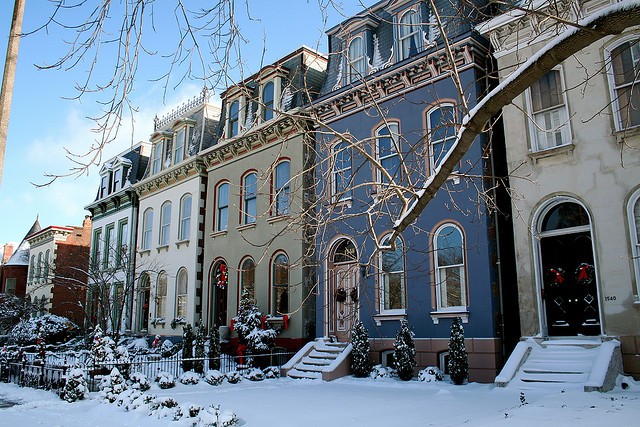
St. Louis Will Be the Nation's Second Hottest Real Estate Market in 2016
St. Louis Will Be the Nation's Second Hottest Real Estate Market in 2016
St. Louis Will Be the Nation's Second Hottest Real Estate Market in 2016
Posted By Sarah Fenske on Wed, Dec 2, 2015 at 6:00 am
Wednesday, November 11, 2015
Home Sales Are Up Again
A month-over-month dip in home sales last month caused real estate watchers to ponder—gasp—a potential cooling of the market. But on Thursday the National Association of Realtors® reported that sales are up again.
Existing-home sales—completed sales of single-family homes, townhomes, condominiums, and co-ops—rose 4.7% from August to September, reaching 5.55 million. That’s the 12th consecutive month to see year-over-year growth, and the second-highest peak since February 2007, when sales totaled 5.79 million.
The median existing-home price for all housing types was $221,900 in September, 6.1% more than September 2014. This is the 43rd consecutive month that we’ve had year-over-year gains. Single-family home sales increased 5.3%, with a median price of $223,500, while condo and co-op sales remained unchanged, with a median existing-condo price of $209,200.
All-cash sales rose, too: They represented 24% of transactions in September, up from 22% in August. Short sales stayed on the market for an average of 135 days, but short sales and foreclosures are still down from a year ago—7% now and 10% then.
Why the reversal on sales in general? These are seasonally adjusted numbers, so they don’t reflect the typical fall slowdown. August sales, however, were affected by the stock market dips that shook buyers’ confidence.

Please, Mr. P
“Sales are impacted by major stock market declines, since at least one in five buyers funds at least a portion of their purchase with stock or retirement funds,” said realtor.com® chief economist Jonathan Smoke. “But barring stock corrections that reflect real economic downturns—which we are not experiencing—homes sales typically return to the prior trend after stock values stabilize.”
But not all numbers were up: Inventory decreased 2.6% and is 3.1% lower than a year go. There’s a 4.8-month supply of unsold housing—in August, it was 5.1 months.
Maybe it’s counterintuitive—how can there be more sales when there’s less inventory?
It’s all that pent-up demand. Unfortunately for first-time buyers, all that competition has driven house prices up; you’re more likely to buy a home if you already have one.
“First-time buyers fell to 29% of sales in September after climbing to their highest share of the year in August (32%),” according to the NAR. “A year ago, first-time buyers represented 29% of all buyers.”
That’s the biggest surprise, Smoke said, but “despite that decline, we estimate from the monthly sales data this year that first-time buyers have been responsible for 45% of the growth in sales over last year.”
Whether the rise in existing-home sales continues depends on one thing: jobs. The 6% rise in prices is just about double the pace of wages. We need more, and better-paying, employment to keep sales up. That’s complicated by the fact that most future job growth is rooted in the relatively low-paying service sector. Sales may be up, but we’ll need inventory to rise with them.
Regional breakdown
Northeast: September existing-home sales rose 8.6% to an annual rate of 760,000, 11.8% above a year ago. The Northeastern median price was $256,500, 4% above September 2014.
Midwest: September existing-home sales rose 2.3% to an annual rate of 1.31 million, 12% above a year ago. The Midwestern median price was $174,400, 5.4% above September 2014.
South: September existing-home sales rose 3.8% to an annual rate of 2.21 million, 5.7% above a year ago. The Southern median price was $191,500, 6.2% above September 2014.
West: September existing-home sales rose 6.7% to an annual rate of 1.27 million, 9.5% above a year ago. The Western median price was $318,100, 8% above September 2014.
By
Thursday, May 28, 2015
Home Sales Prices Rise Strongly in April
New U.S. single-family home sales rose more than expected in April and the median price surged, suggesting the housing market recovery was continuing to gain traction.
With housing supply still tight, the median price for a new home rose 8.3 percent from a year ago to $297,300. While higher home prices could reduce affordability, they boost household equity, which could boost consumer spending.
The Commerce Department said on Tuesday sales increased 6.8 percent to a seasonally adjusted annual rate of 517,000 units. March's sales pace was revised up to 484,000 units from the previously reported 481,000 units.
The upbeat report added to housing starts data in indicating that housing was gaining momentum after treading water for much of last year. Economists believe housing will take the baton from a lethargic manufacturing sector and help to drive economic growth this year.
Housing is being buoyed by a strengthening jobs market, which is encouraging young adults to set up their own households.
New homes sales jumped 36.8 percent in the Midwest to a seven-year high and increased 5.8 percent in the South. Sales fell 5.6 percent in the Northeast and slipped 2.3 percent in the West.
The stock of new houses available on the market rose 0.5 percent last month to 205,000. Supply still remains less than half of what it was at the height of the housing boom, good news for home builders who will need to ramp up construction.
At April sales pace it would take 4.8 months to clear the supply of houses on the market, down from 5.1 months in March.
Monday, May 04, 2015
Real Estate recap this week
The rate of distressed home sales fell to 2008 levels in February and should return to a historically normal level in mid-2017 if the annual decrease seen that month holds steady, according to data aggregator CoreLogic.
 Here’s what happened this week in the real estate market:
The number of seriously underwater homeowners inched up slightly during the first quarter due to slow home price appreciation, according to housing data provider RealtyTrac.
Home prices continued to rise in February, posting higher annual gains than in January, according to the latest Case-Shiller 20-city Composite.
The number of homes that went under contract rose for the third straight month in March, the National Association of Realtors reported.
Although most analysts have shown optimism for a strong spring homebuying season, online mortgage marketplace provider Zillow reported that its 30-year fixed mortgage rates have been flat for the past month.
New research from emerging markets portal Lamudi shows that Pakistan has the most eco-friendly homes for sale and for rent among the 30-plus countries in Asia, Africa, the Middle East and Latin America the site examined — for the second year in a row.
Better inventories and softer prices in the mid and upper tiers, improved levels of equity, strengthening income levels, and forecasts of rising rates coupled with pent-up demand and faster rising prices for entry-level homes could make this the perfect year for move-up sellers and buyers to move on up.
Mortgage rates inched up this week amid mixed economic reports.
Purchase mortgage loan activity is gaining momentum as the housing market enters the peak spring buying season, according to Ellie Mae’s latest Origination Insight Report.
The big news of the week: The U.S. economy stalled in the first quarter, GDP rising 0.2 percent. And long-term rates, which go down on weak economic news, instead went up.
provided by Inman
Monday, November 03, 2014
Economic Momentum is Strengthening Home Buyer Demand
Economic Momentum is Strengthening Home Buyer Demand: The housing market has been steadily growing and now has the potential to grow even more as mortgage rates remain low and have just ticked upward off of their one-year lows and credit is starting to loosen.
But what is ultimately driving demand is the strength in the labor market and related improvements in consumer attitudes. Jobless claims in October remained beneath 300,000: The last month that averaged under 300,000 weekly claims was June 2000 (almost a 40 year low). Continuing claims were last this low at the height of the housing boom.

Consumer confidence and consumer sentiment are both now at seven-year highs.
The first estimate of the third quarter GDP indicated the economy expanded 3.5% as all sectors including government spending contributed to growth. The condition of the U.S. economy is clearly improving.
In every year of this recovery we’ve seen growth fade as we reached the fourth quarter. But this time it may be different as almost all the fundamentals are much healthier. Jonathan Smoke, Realtor. com's chief economist, expects to see solid employment numbers for October this week and more positive momentum to carry the housing market through the winter.
| ||
| Email: mo-budzinski@ |
Friday, October 31, 2014
Homeowners Win with Major Drop in Distressed Sales
The housing market continues to show signs of improvement, but one number recorded in the National Association of Realtors July existing home sales data really exemplifies that progress —a drop in the number of homes sold in distress.
According to NAR, only 9 percent of homes last month were sold in distress, which encompasses foreclosures and short sales. That number is the lowest NAR has recorded since the organization began tracking distressed sales in October 2008.

For comparison, distressed sales accounted for 15 percent of all sales just one year ago. NAR Chief Economist Lawrence Yun said the drop in distressed home sales resulted from rising home sales, which help owners recover equity, and steady job creation, which adds financial stability for homeowners.
According to NAR, only 9 percent of homes last month were sold in distress, which encompasses foreclosures and short sales. That number is the lowest NAR has recorded since the organization began tracking distressed sales in October 2008.
For comparison, distressed sales accounted for 15 percent of all sales just one year ago. NAR Chief Economist Lawrence Yun said the drop in distressed home sales resulted from rising home sales, which help owners recover equity, and steady job creation, which adds financial stability for homeowners.
Subscribe to:
Posts (Atom)